
Voice-Interactive LED Light Panel
Intelligent Lighting System Design and Implementation - Course Project
Course Requirements
Intelligent LED Lighting System Design
This project covers the full lifecycle of an intelligent LED lighting system—from conception and design to implementation and operation. It requires the comprehensive application of knowledge in power systems, human landmark annotation and tracking, signal control, programming, LED device structures and lighting characteristics, machine vision, and artificial intelligence. The goal is to develop an intelligently controlled lighting system utilizing PWM linear control for LED brightness and human feature tracking technology.
Course Objectives
Application of Engineering Knowledge
Ability to apply engineering and professional knowledge to the design, control, and optimization of a lighting system and its characteristics.
System Analysis Skills
Ability to use fundamental principles of engineering science and professional knowledge to analyze and identify key aspects and important parameters of a lighting system.
Feasibility Study
Ability to research the feasibility of design solutions under real-world constraints such as social, health, safety, environmental, legal, and cultural factors.
Data Processing and Analysis
Ability to correctly collect and organize experimental data, and to research and analyze the results to draw reasonable and valid conclusions.
Expression and Communication Skills
Ability to articulate design ideas effectively.
Project Introduction
Based on first-principles thinking, I analyzed that human interaction with lighting is essentially information control, and voice is a highly natural and compatible input method. Since lighting is meant to combat darkness, active voice input is more effective for a machine in the dark than passive visual capture. Therefore, I chose voice interaction to design this smart light source. My voice-interactive LED panel is an intelligent hardware system integrating voice recognition, LED display control, and human-computer interaction. Using an Arduino UNO as the main controller and an ASR-PRO voice recognition module, the system recognizes Chinese voice commands to control a WS2812 LED panel to display various lighting effects. Through modular design, the project integrates functions like voice input, signal processing, command parsing, and LED control, offering an imperfect yet relatively complete solution for smart homes and HCI.
Voice Recognition Technology
Utilizes the ASR-PRO module, supporting custom command training and Chinese voice recognition.
LED Control Technology
Based on programmable WS2812 LEDs, allowing for individual pixel control and multiple lighting effects.
System Integration
Achieves data transfer between modules via serial communication, ensuring system stability.
User Experience
Supports 5 voice command modes, providing an intuitive voice interaction experience.
Hardware Design
The voice-interactive LED panel employs a modular design, integrating core components like voice recognition, a microcontroller, and an LED display. The system uses serial communication for data transfer between modules, ensuring good real-time performance and stability.
System Architecture
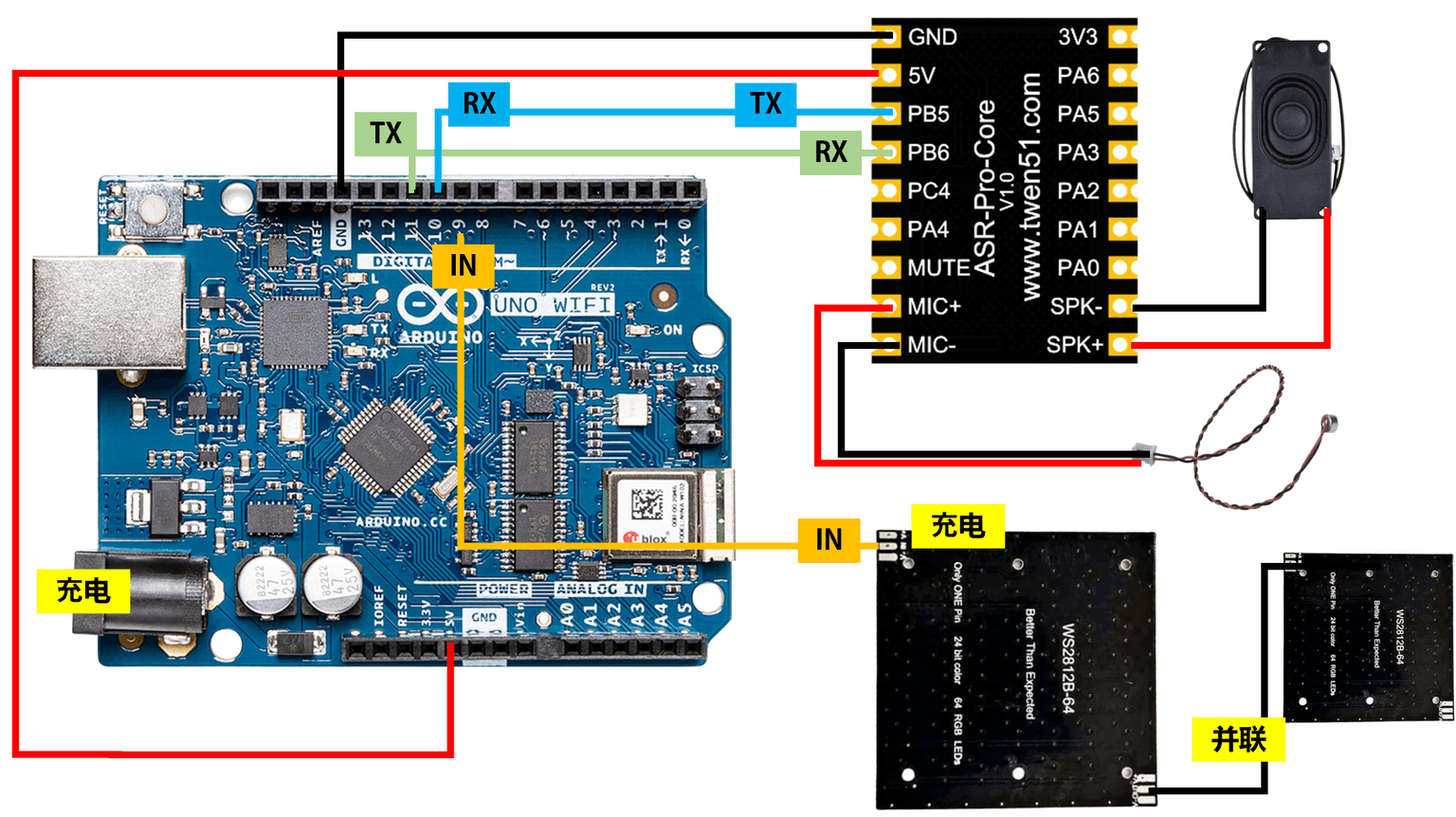 System Hardware Connection Diagram - Showing connections between modules
Core Hardware Modules
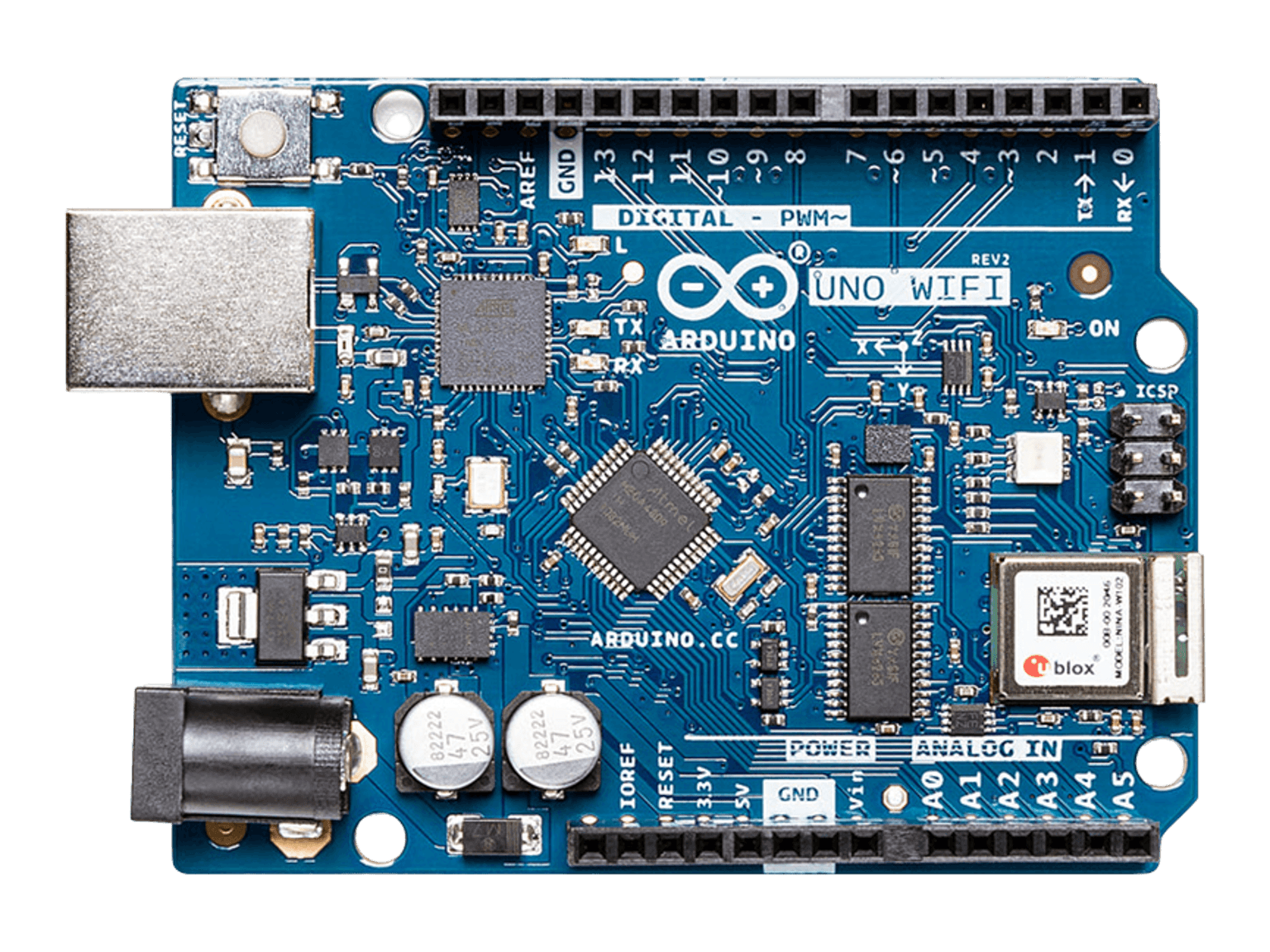 Arduino UNO - The system's main controller
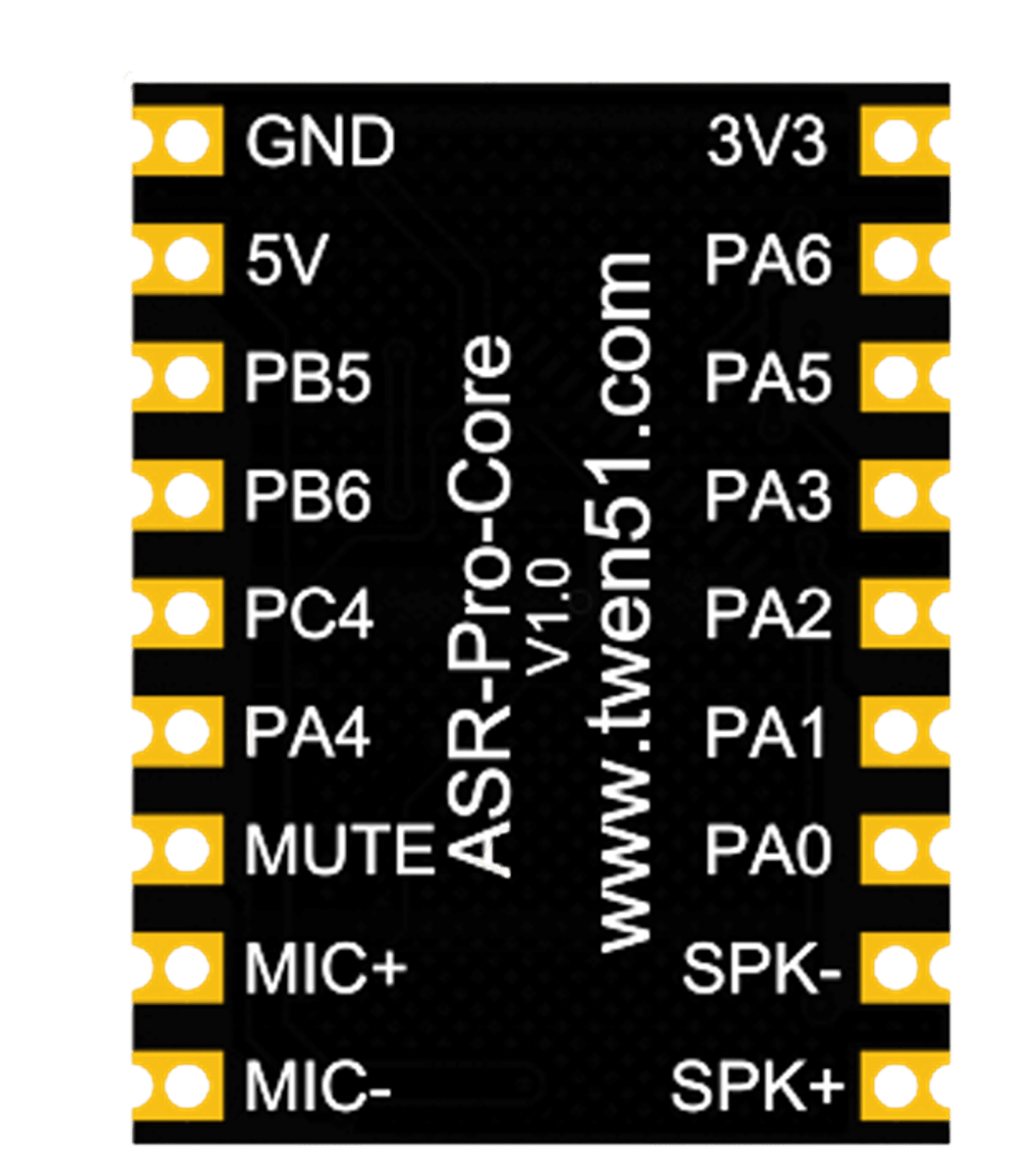 ASR-PRO - Core voice recognition module
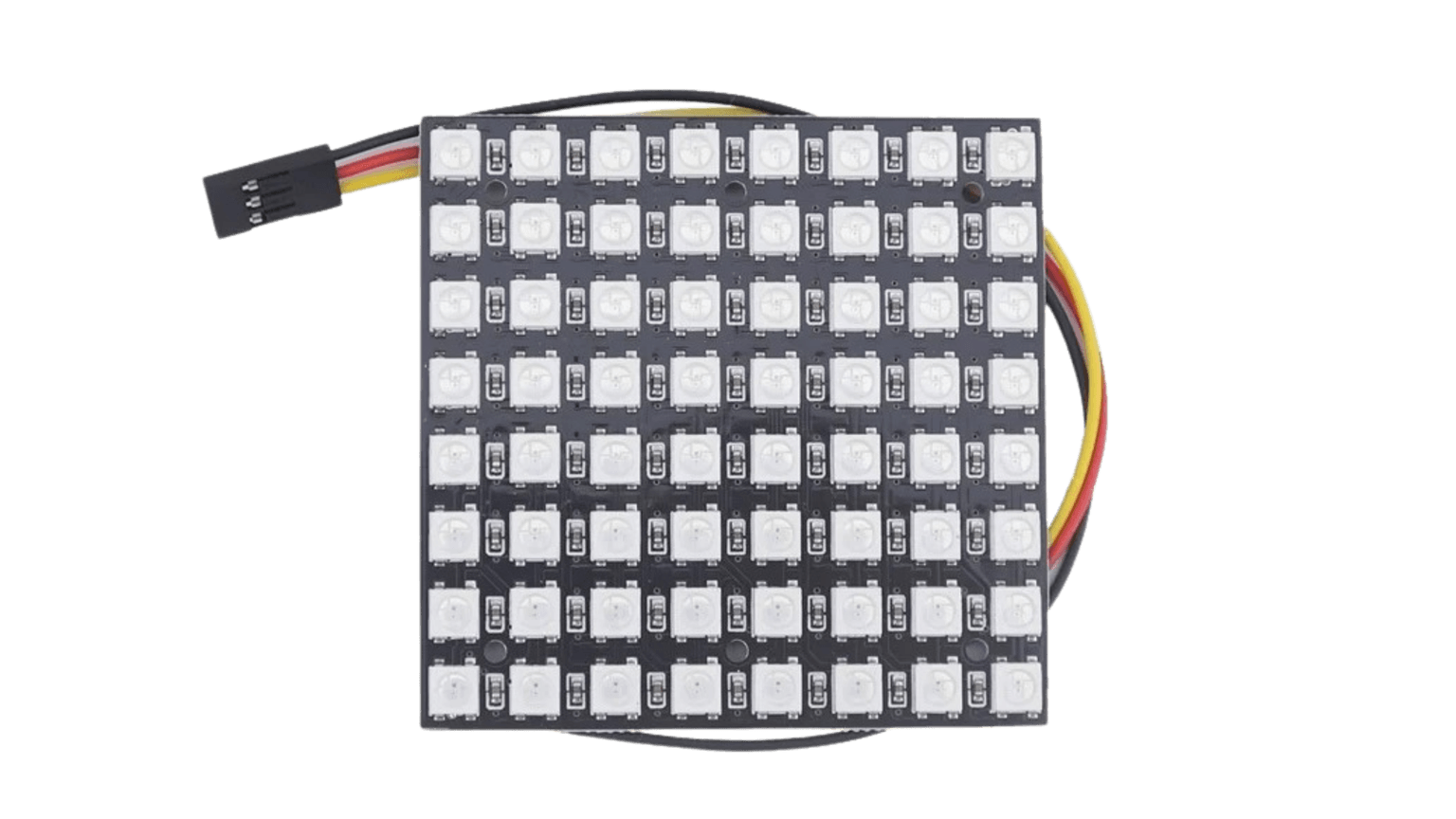 WS2812 LED - Programmable RGB display unit
Arduino UNO
- Low-cost microcontroller
- 14 digital I/O pins
- 16MHz clock speed
- Serial communication support
ASR-PRO Module
- Supports up to 50 command words
- Chinese voice recognition
- Voice synthesis function
- 3-5 meter recognition range
WS2812 LED
- 64 LED pixels (8x8)
- Full-color RGB display
- Single-bus control
- Individual pixel control
Final Product Showcase
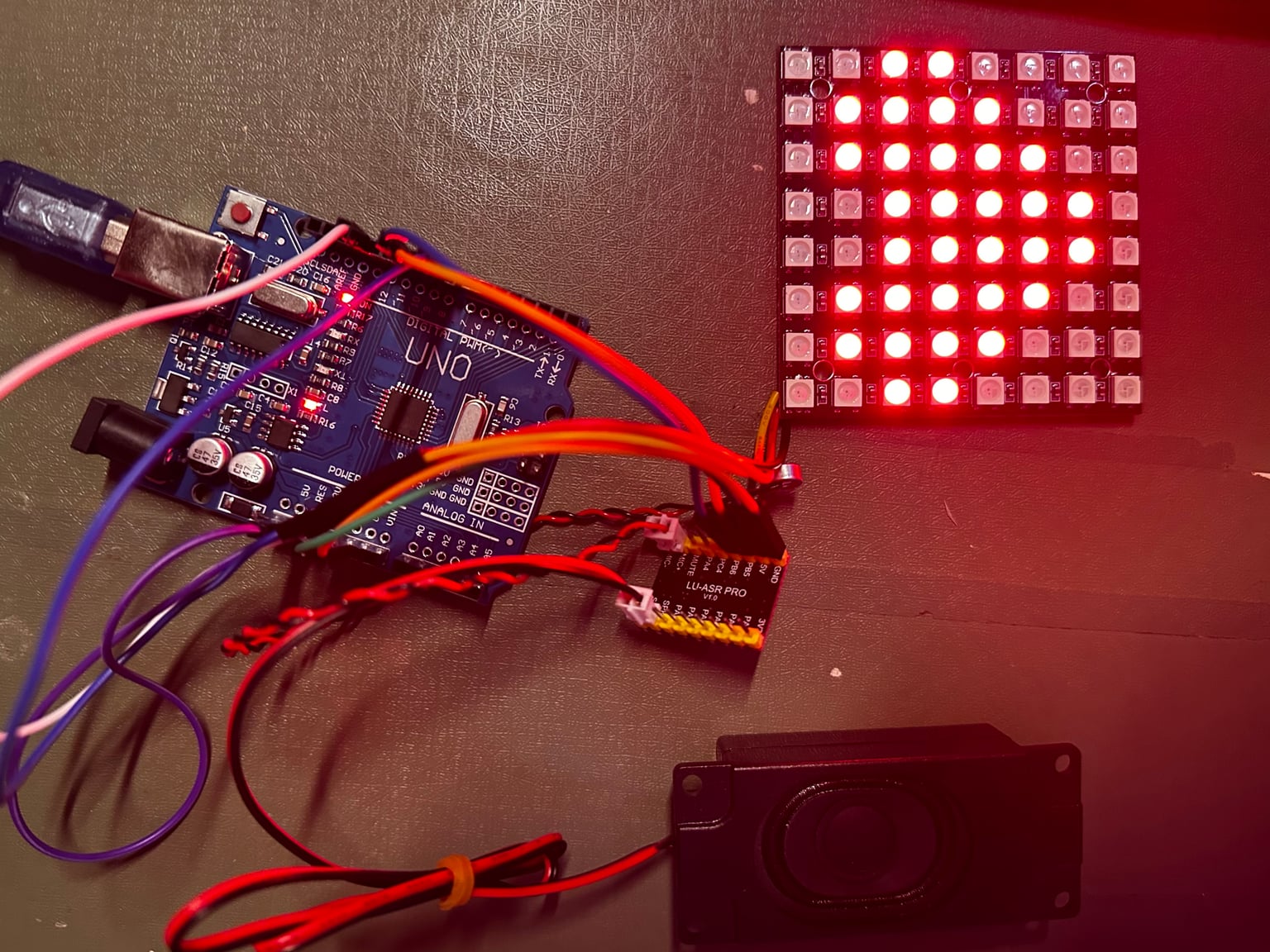
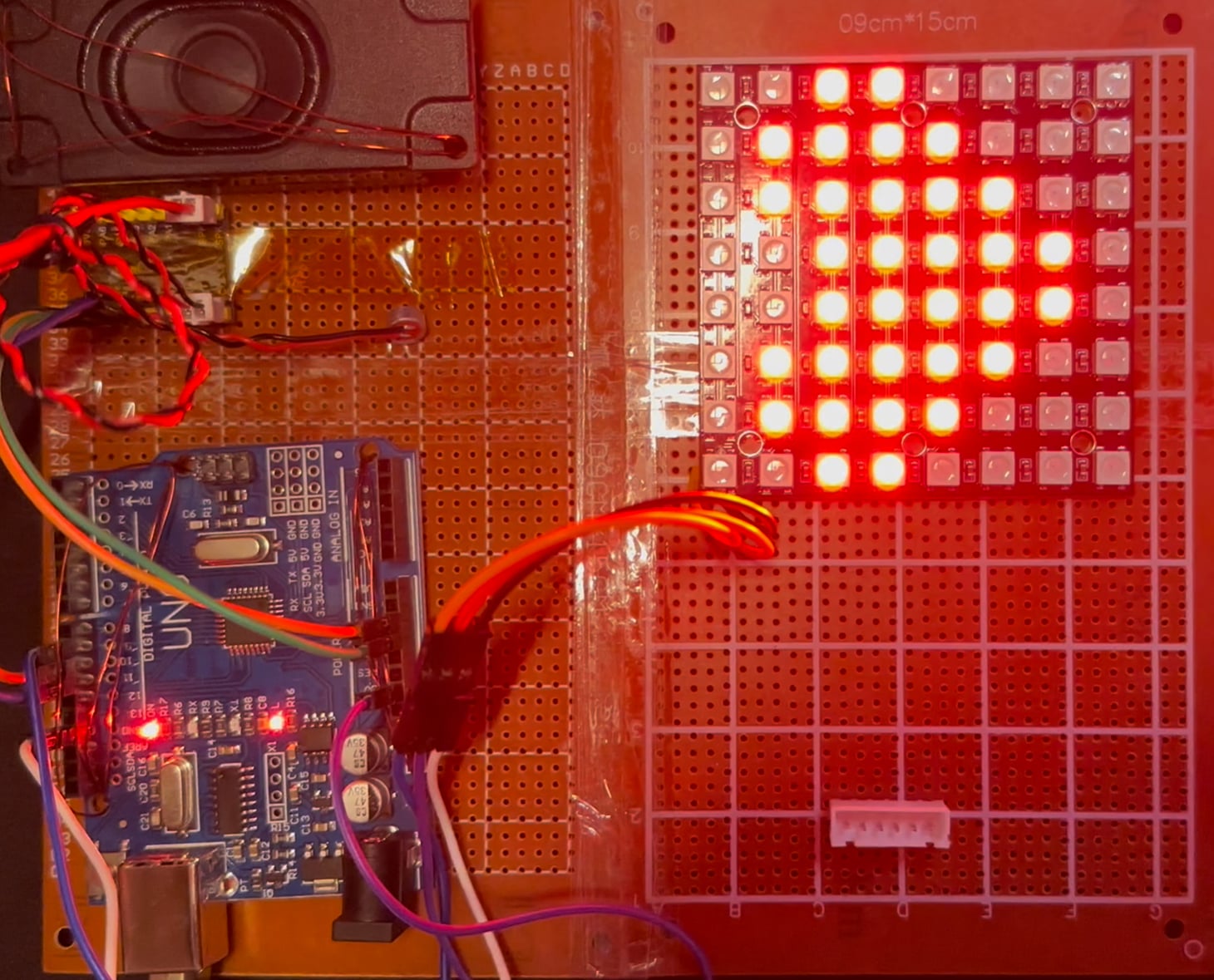 The completed voice-interactive LED panel - Full system view
Software Design
Arduino UNO Main Controller Program
Responsible for LED effect control and serial communication:
Arduino UNO Main Controller Program
ASR-PRO Voice Recognition Program
Handles voice recognition and command transmission:
ASR-PRO Voice Recognition Program
Core Algorithm Flow
Voice Activation
ASR-PRO module detects and processes voice commands.
Command Parsing
The recognized result is converted into a corresponding command string.
Serial Transmission
The command is sent to the Arduino controller via serial communication.
LED Control
Arduino parses the command and calls the corresponding LED effect function.
Effect Display
The WS2812 LED strip displays the corresponding color and dynamic effect.
Function Demonstration
The voice-interactive LED panel supports 5 voice commands, each corresponding to a different LED lighting effect. The system recognizes Chinese voice commands via the ASR-PRO module and responds in real-time.
Complete Function Demonstration Video
Rainbow Mode
Voice Command: "cai hong" (Rainbow)
Trigger: ASR-PRO recognizes ID=1
Serial Command: "rainbow"
Effect: The LED strip displays a flowing rainbow gradient effect, creating a dynamic visual experience.
Implementation: Calculates a 360-degree hue shift in HSV color space to create a moving gradient.
Warm Light Mode
Voice Command: "nuan guang" (Warm Light)
Trigger: ASR-PRO recognizes ID=2
Serial Command: "warm"
Effect: The LED strip emits a warm yellow light, suitable for reading and relaxation.
Implementation: Sets the RGB value to a warm tone (255, 150, 80) for a comfortable ambiance.
Cold Light Mode
Voice Command: "leng guang" (Cold Light)
Trigger: ASR-PRO recognizes ID=3
Serial Command: "cold"
Effect: The LED strip produces a cool, bluish-white light, ideal for work and study.
Implementation: Sets the RGB value to a cool tone (180, 200, 255) for clear, bright lighting.
Heart Mode
Voice Command: "ai xin" (Heart)
Trigger: ASR-PRO recognizes ID=4
Serial Command: "heart"
Effect: The LED strip lights up in a preset heart-shaped pattern, displaying a pink heart.
Implementation: Uses a predefined 'heart' array to control specific pixels and form the shape.
Off Mode
Voice Command: "guan bi" (Turn Off)
Trigger: ASR-PRO recognizes ID=5
Serial Command: "close"
Effect: Turns off all LEDs, putting the system into standby.
Implementation: Sets the RGB value of all pixels to (0, 0, 0) to turn them off completely.
System Performance Metrics
From 'Voice Switch' to 'Perceptive Companion': A Blueprint for the Smart Light Panel's Future
After completing this project, I've been thinking: my prototype works, but its 'intelligence' is limited. True innovation should break the traditional 'command-execute' paradigm. Based on this, I envision three evolutionary stages for this panel, transforming it from a simple 'tool' into a perceptive, warm 'companion'.
Depth of Intelligence: From 'Understanding' to 'Perceiving'
Enabling the panel to not just execute commands, but to understand emotions.
My Observed Limitation
"My panel understands 'rainbow', but it doesn't understand my fatigue."
My Research Direction: Deep Mining Information in Spectrograms
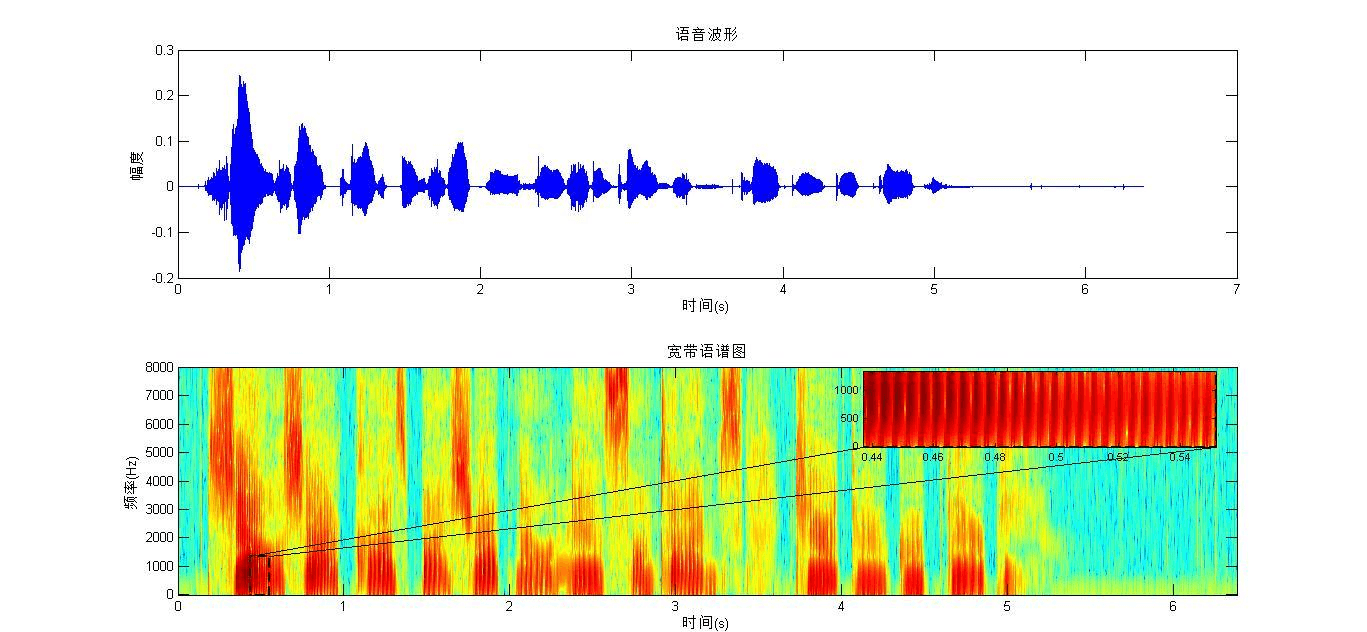 Voice Signal Spectrogram - The basis of my research on voice feature extraction
I discovered that a simple sound wave can be transformed into an information-rich spectrogram via Fourier transform. This made me realize that voice contains far more information than I imagined. Beyond keywords, I can extract features like pitch variation, energy distribution, and formants, all of which can reflect the speaker's emotional state.
My Envisioned Applications
Personalized Interaction
I want the system to recognize different users' voice characteristics, including dialects, to provide a personalized interaction experience for everyone.
Emotional Awareness
I'm most interested in making the light emotionally aware. For example, if I say 'turn off the light' when I'm tired, the system could detect my fatigue from my tone and switch to a soft, warm light instead of just shutting off. That would be a much warmer interaction.
Architectural Innovation: From Cloud to Edge
Allowing AI to 'think' on a tiny chip.
The Technical Choice I Face: Cloud or Local?
Cloud Processing
Local (Edge) Processing
After consideration, I believe local processing is the better choice for smart home scenarios that require instant responses and involve privacy.
The Solution I Found: TinyML Technology
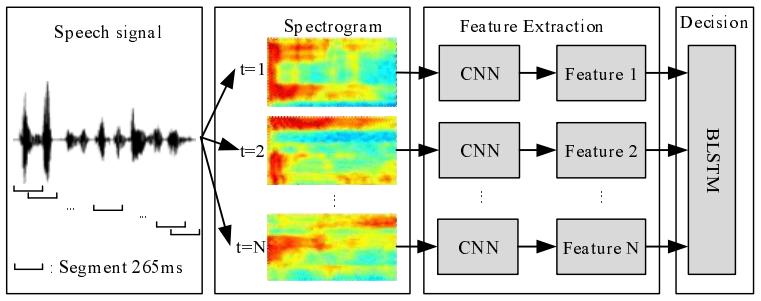 CNN-based amplitude method structure
Cloud Training
First, train a complex AI model on a computer.
Model Optimization
Compress the model size using techniques like quantization.
Embedded Deployment
Deploy the optimized model onto hardware like Arduino.
Experience Elevation: From Tool to Art
Giving every beam of light warmth and personality.
My Thoughts on User Experience
I find the current LED control to be a bit rigid. I hope to use techniques like Gamma correction in the future to make every light transition feel more natural to the human eye, like a gentle breath.
My Ultimate Vision: Generative Light Art
My Envisioned Evolutionary Path:
Future light modes shouldn't be limited to a few presets. Instead, they should be able to generate unique light effects in real-time based on my emotions, the rhythm of my voice, or even the ambient music. I found a website called Mozilla Common Voice that provides extensive voice data for various Chinese dialects. I can use this data to train an AI model that allows the light panel to understand dialects from all over China and achieve personalized lighting.
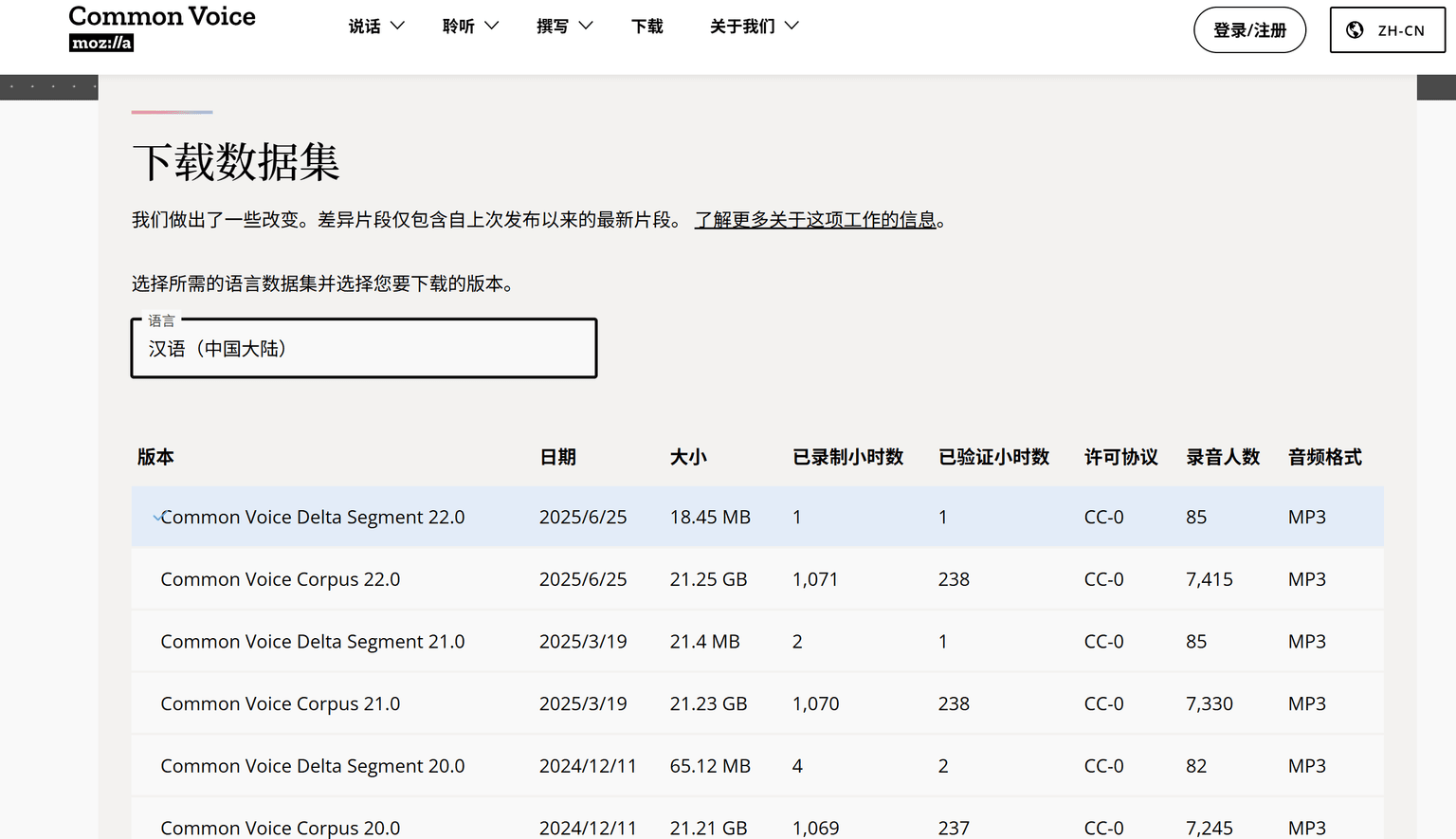 Mozilla Common Voice - A voice dataset platform I'm following
My Vision
I hope that one day, this panel will be more than just a lighting tool. It will be an intelligent companion that understands my emotions and resonates with me, truly evolving from a simple 'voice switch' to a warm 'perceptive companion'.
Project Summary
This course project successfully completed the design and implementation of a voice-interactive LED light panel system, covering hardware assembly, software programming, and system integration. Through this project, I gained in-depth knowledge of embedded development and voice recognition technology, and achieved a good course grade.
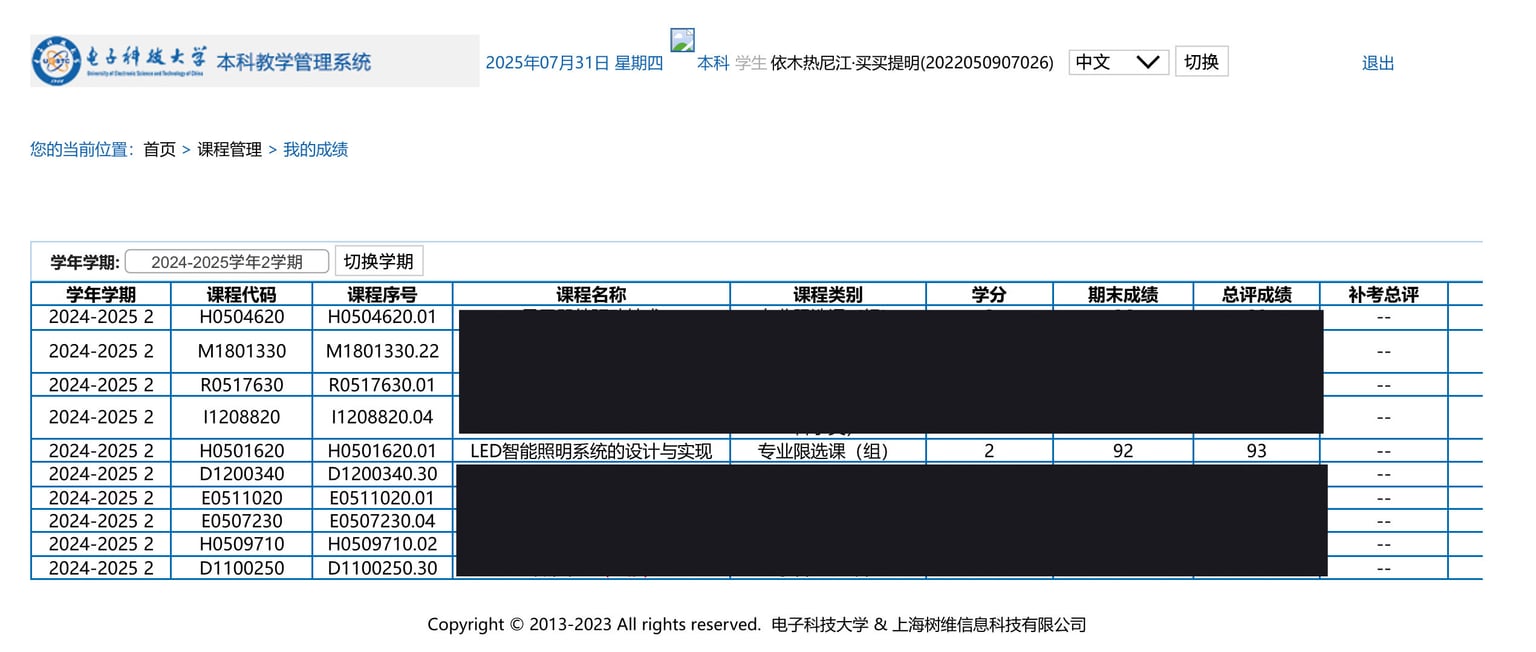 Screenshot of course grade
My Takeaways: Three Things This Project Taught Me Beyond Functionality
The Essence of Intelligence is 'Perception,' Not 'Execution'
True smart interaction lies in understanding the emotion and personality behind a voice, not just passively decoding commands. It should evolve from a 'tool' into a 'companion'.
Great Products Require 'Industrial-Grade' Thinking
To move from a fun prototype to a reliable product, one must bridge the gap from 'workshop' development to 'industrial-grade' design, systematically considering real-world engineering challenges like edge computing and model optimization.
Good Experiences Stem from Respect for 'People'
The ultimate purpose of technology is to serve human feeling. Whether it's a smooth lighting effect that follows the laws of human vision or generative art that creates surprise, the most moving designs are always rooted in a deep understanding of and respect for physical and physiological principles.
I am grateful to Professor Xiao Haibo for his dedicated guidance. I have benefited greatly from this course project.